Technical Support
Alarm Testing And Commissioning
Testing Hard-wired & RadioLINK Alarms
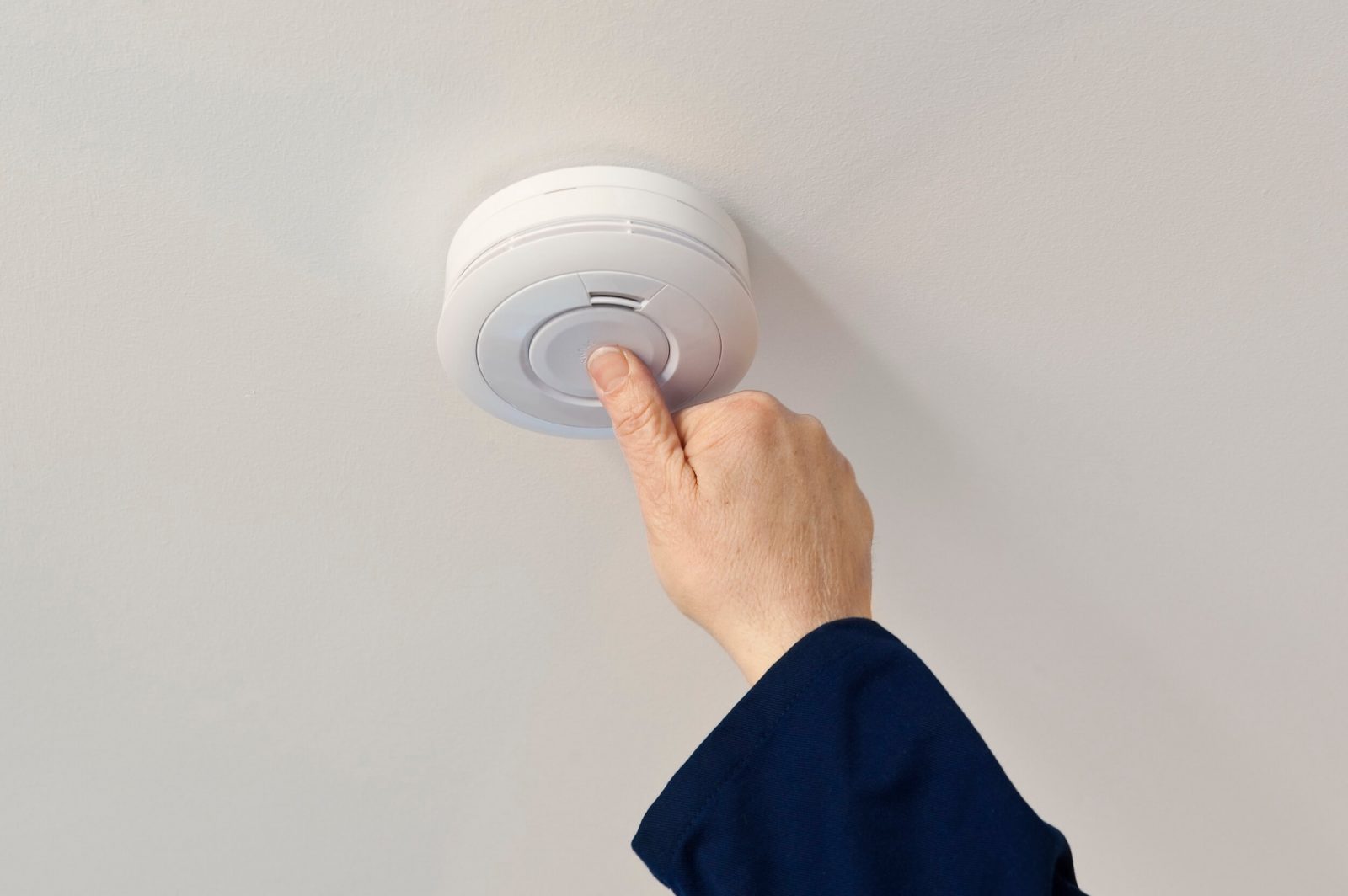
Step 1 – Checking on Battery Back-Up
- Turn off the mains power to the alarm circuit and check that the green light is off
- Listen for a couple of minutes to test that the alarm does not beep. Press and hold the test button for up to 10 seconds to ensure the alarm sounds and triggers any interconnected alarms
Step 2 – Checking On Mains Power
- Turn the mains power to the alarm back on. Check that the green power light is on
- Press and hold the test button for up to 10 seconds to ensure the alarm sounds and triggers any interconnected alarms
- Troubleshooting: If the green light does not come on check the circuit breakers, fuses, wiring etc.
- For more information on testing please view the individual product instructions – these can be found on their product pages
System Grade
Alphabetical scale that describes the type of alarms that are installed in the system. The most common Grades for domestic installations are:
Grade D = an installation of self-contained mains-powered smoke or heat alarms each provided with an integral standby power supply.
Grade F = an installation of self-contained battery powered smoke or heat alarms each provided with a sealed-in long life battery with minimum lifetime of 10 years.
NOTE Interconnections can be by radio or wiring.
For Grade D and Grade F systems, where multiple devices are used, all devices within a dwelling shall be interconnected so that detection of fire by one device can provide an audible alarm from all devices.
System Category
References the areas of coverage with the alarm system:
LD1 = Interconnected self contained mains powered/battery backed smoke/heat alarms (as Grade D) shall be suitably located:
- All areas specified for a category LD2, and
- All rooms and areas, including attics, lofts and other spaces, in which a fire could start, other than toilets, bathrooms, and shower rooms.
LD2 = Interconnected self contained mains powered/battery backed smoke/heat alarms (as Grade D ) shall be suitably located in :
- All circulation areas that form part of an escape route within a dwelling, and
- All bedrooms, and
- All high fire risk areas and rooms,
EXAMPLE: kitchen, living room, garage, utility room.
System Commissioning and Testing
A blue dust cover is provided with all alarms – this must be fitted over alarms if building work is still on-going to prevent contamination and removed prior to testing and commissioning.
Once the system has been installed it should be tested in accordance with the manufacturer’s recommendations to ensure operation of each unit and all interconnections. A documented confirmation of design, installation, and commissioning of Fire Detection Alarm System (FDAS) in a dwelling shall be issued to the person having control. A model confirmation document is provided in Annex B, Figure B.6 of the IS 3218:2024 standard.
Routine testing and servicing
- Alarms should be tested at least monthly by the occupant in accordance with the manufacturer’s instructions.
- Alarms should be cleaned periodically in accordance with manufacturer’s instructions.
- Each alarm is provided with instructions for the occupant they can also be downloaded from the product page in the product section
User Instructions and Handing Over
- Many Installation Certificates require the occupier to be given written information on certain things such as operation of the system or action to be taken in the event of a fire.
- The ‘User Instructions’ supplied with the alarms cover all of these essential points and must be handed over to the person who lives in the property once installation and testing is complete.
- Extra copies of the instructions can be found on the individual product pages in the products section.
- There is a blue dust cover provided with all alarms – this must be fitted over alarms if building work is still on-going to prevent contamination. When the work has finished remove the dust cover and give to the owner of the property. If work has not finished and you will not be returning to the property ensure that the owner knows they must remove the dust cover once building work has finished.
We’re Here To Help
Find the information you need in our library of educational and informative resources.
FAQs